



Sirius project completed: green hydrogen electrolyser validated at industrial scale with record purity
01 September 2026 - ProjectsLed by Hyter, a company of the Pietro Fiorentini Group, together with INRETE Distribuzione Energia (Hera Group), MatRes and the Department of Chemical Sciences of the University of Padua, SIRIUS has now come to a close. The project, funded by Italy’s National Recovery and Resilience Plan (PNRR), made it possible to design, build and validate, in a real industrial environment, an electrolyser capable of producing hydrogen with a purity of up to 99.999%.
The higher the purity of green hydrogen, the wider the range of applications in which it can be used without further treatment. At 99.999% purity, the hydrogen produced by Hyter’s electrolysers has a direct impact on costs and energy efficiency.

This was made possible by three years of work carried out by four organisations: INRETE Distribuzione Energia (Hera Group), MatRes (MBN Nanomaterialia), the Department of Chemical Sciences of the University of Padua, and Hyter, a company of the Pietro Fiorentini Group, acting as project leader. At the heart of the project is AEMWE technology, Anion Exchange Membrane Water Electrolysis, developed by Hyter to produce green hydrogen through water electrolysis.
Thanks to the essential contribution of all the organisations involved, SIRIUS delivered:
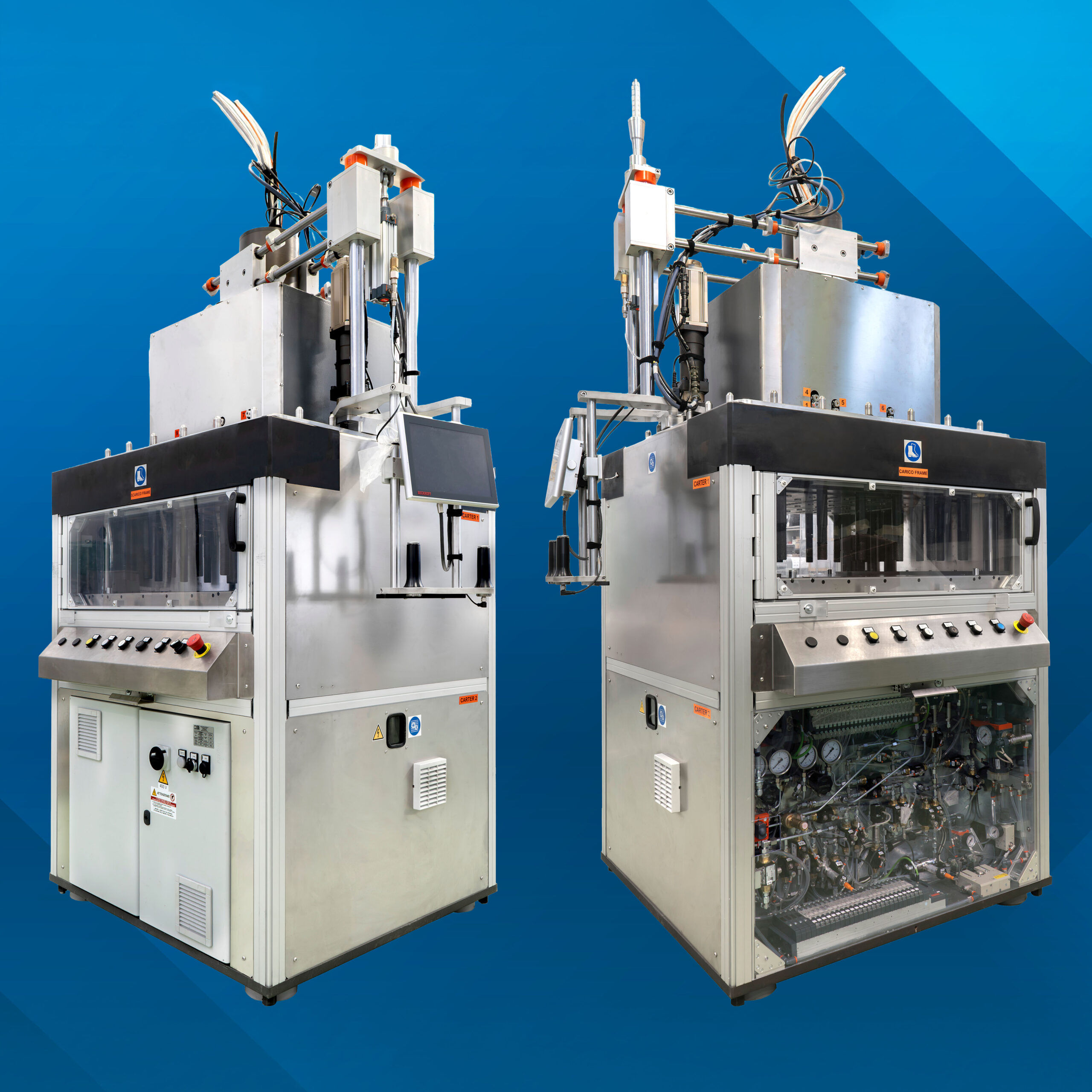
- the design, construction and validation, in a real environment, of an AEMWE electrolyser sized for a power capacity of up to 1 Megawatt
- hydrogen produced with a purity of up to 99.999%, compliant with the international ISO 14687 standard
- new advanced electrode materials, developed and validated also at real-world scale
- patent filings covering materials and the design of the cell and stack
Each partner played a precise role throughout the project. Hyter was responsible for the design of the electrolyser’s system architecture, the development of the electrolytic cell and its control system, and the realisation of the industrial prototype, from stack assembly through to plant commissioning. The stack, the core component of the electrolyser, is made up of frames, which in turn contain the so-called chemical packs, where the electrolysis reactions take place. Specifically, this solution is based on modular 250-kilowatt stacks that can be combined with one another, designed to achieve an energy efficiency of up to 85% and a purity target of 99.95%, which the testing phase actually exceeded, reaching 99.999%.
Alongside the design and engineering work, research into new materials also played a key role: MatRes developed prototypes of new electrode supports based on nanostructured materials, with mechanical and electrochemical performance tailored to SIRIUS’s specific technological requirements, while the Department of Chemical Sciences of the University of Padua helped develop and test new, more sustainable electrocatalysts, with reduced use of noble metals, and carried out analyses on the purity of the hydrogen produced.
To complete the development path, the technology was validated in the field thanks to INRETE Distribuzione Energia, which hosted and managed the trial at the plant site in Granarolo dell’Emilia (Bologna, Italy), home to the waste-to-energy plant operated by FEA, a Herambiente subsidiary. The testing phase also saw the direct involvement of HeraTech, a Hera Group company, which handled the design and construction of the pilot plant, its integration with existing infrastructure, and the coordination of the activities required for the industrial validation of the technology.
Through its own laboratories, HeraTech also carried out quality analyses on the hydrogen produced, contributing to the verification of system performance and the qualification of the results obtained. The pilot plant, powered by renewable electricity generated by the waste-to-energy plant itself, successfully confirmed the technical feasibility, reliability and operational stability of the solution in a real industrial setting.
This achievement confirms the scalability of the technology towards the Megawatt scale and beyond, bringing Hyter’s AEMWE technology to a higher level of industrial maturity and laying the foundations for the next step towards industrialisation.
The SIRIUS project received funding from Italy’s National Recovery and Resilience Plan (PNRR), Mission 2 “Green Revolution and Ecological Transition,” Component 2 “Renewable Energy, Hydrogen, Grid and Sustainable Mobility,” Investment 3.5 “Research and Development on Hydrogen,” European Union – NextGenerationEU.

Focus on: Hyter
Part of the Pietro Fiorentini Group since 2021, Hyter is a benchmark player in the design and production of electrolysers for green hydrogen generation. From its headquarters in Desenzano del Garda, it develops electrolytic cells and key components for its electrolysers through its in-house R&D team and proprietary chemical laboratory. The company’s portfolio is built on two complementary technologies: AEMWE (Anion Exchange Membrane Water Electrolysis), proprietary to Hyter, which combines the advantages of alkaline and PEM technologies, delivering high efficiency, environmental sustainability and reduced costs, and is used in electrolysers up to 1 MW; and PEM technology, based on a proton exchange membrane, which enables fast and efficient production of pure hydrogen and is used in large-scale plants above 1 MW. The company operates according to ISO 9001:2015 standards and is a key player in national and European research programmes (including the PNRR-funded SIRIUS project and the Horizon Europe Electrolife project) in support of the global energy transition.
hyter.it
Focus on: Hera Group
The Hera Group is one of Italy’s leading multi-utility companies, operating in the environment, energy and water sectors, with around 10,500 employees. More than 7.5 million citizens (around 13% of the Italian population) receive at least one service from the Group. INRETE Distribuzione Energia is the Hera Group subsidiary active in natural gas and electricity distribution in Emilia-Romagna and Tuscany; Herambiente is Italy’s leading operator in the environment sector by volume of waste treated; while HeraTech handles the Group’s engineering, technological and analytical activities.
gruppohera.it
Focus on: MatRes
MatRes (MATerials RESearch) is the research and development arm of MBN Nanomaterialia, an Italian company that has been developing advanced materials for industry for over 30 years. MBN’s approach integrates research, materials design and scale-up processes, accelerating the transfer of innovation from the laboratory to industrial production.
mbn.it
Focus on: Department of Chemical Sciences at the University of Padua
Established in 2004 through the merger of three departments, the DiSC is now one of the most recognised centres for chemical research in Europe. It is home to 101 tenured researchers distributed across 26 research groups, 47 postdoctoral fellows, and approximately 1,100 students. According to the Nature Index, it is the top Italian chemistry department in terms of the quality of its scientific output. It plays a leading role in molecular sciences applied to health, energy, catalysis, sustainable chemistry, and nanomaterials.
chimica.unipd.it